Why Balance Matters: Nutrients and Satiety
A balanced dinner isn't about perfection—it's about consistently including a variety of foods that provide the nutrients your body needs to feel full, energized, and satisfied. When you combine vegetables, protein, whole grains, and healthy fats, you support steady energy and better satiety (feeling full) after your meal.
The Healthy Eating Plate from Harvard's T.H. Chan School of Public Health is a science-based visual guide that helps you build meals without counting every gram or calorie. It emphasizes proportions: half your plate vegetables and fruits, a quarter whole grains, and a quarter healthy protein. This framework allows flexibility for different cuisines and personal preferences.
- Vegetables and fruits provide fiber, vitamins, and antioxidants.
- Protein supports muscle repair and satiety.
- Whole grains offer sustained energy and additional fiber.
- Healthy plant oils (like olive oil) used in moderation round out the meal and aid nutrient absorption.
Sources: Harvard T.H. Chan School of Public Health, Kaiser Permanente
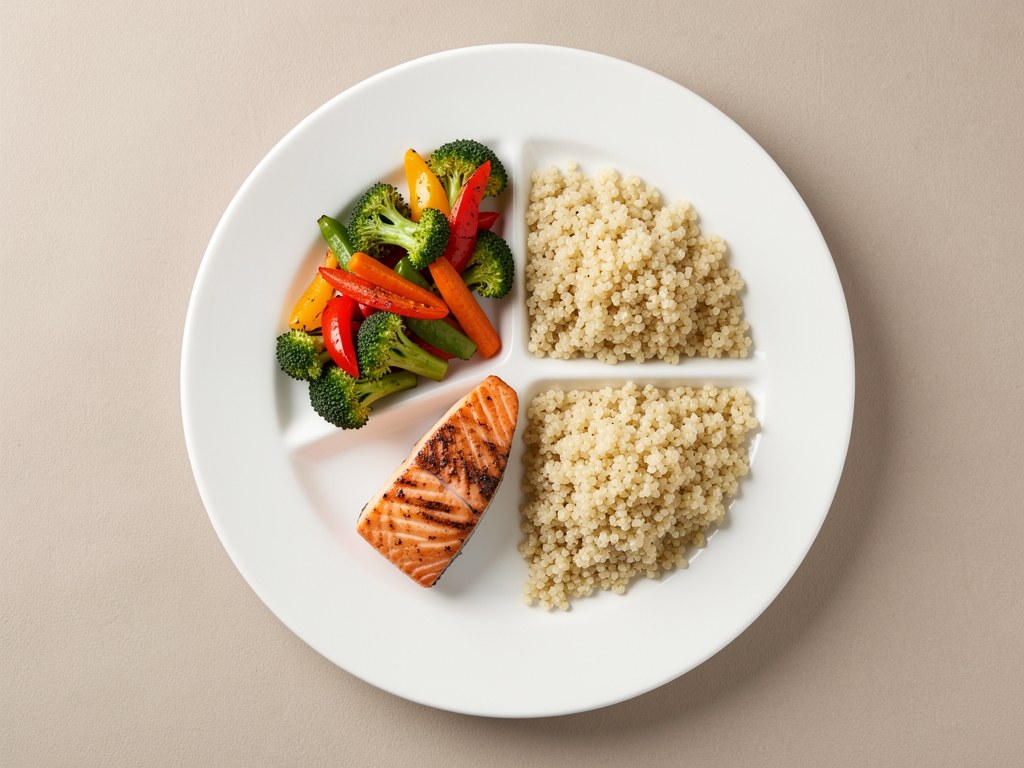
The Plate Method: Vegetables, Protein, Whole Grains, Healthy Fats
The plate method is a straightforward visual guide: fill half your plate with non-starchy vegetables, one quarter with a healthy protein, and one quarter with whole grains or starchy vegetables. Add a modest amount of healthy fats, such as a drizzle of olive oil or a few slices of avocado, to boost flavor and satiety (Lindsay Pleskot, RD, describes this as the satiety factor).
Key guidelines from the Harvard Healthy Eating Plate include:
Potatoes (white or sweet) do not count as vegetables on the plate because they affect blood sugar similarly to refined grains. They belong in the whole grains/starches category. Similarly, starchy vegetables like corn, peas, pumpkin, and winter squash also fit in the starch section, not the vegetable half.
Healthy protein choices include fish, poultry, beans, and nuts. Limit red meat and avoid processed meats such as bacon and sausage.
For grains, choose whole grains like brown rice, quinoa, or whole-wheat pasta over refined white versions.
Healthy plant oils—olive, canola, soy, corn, sunflower, and peanut—are encouraged in moderation. Avoid partially hydrogenated oils.
Include healthy drinks: water, coffee, or tea. Skip sugary drinks, limit milk and dairy to one to two servings per day, and limit juice to a small glass per day.
- Half the plate: colorful non-starchy vegetables
- Quarter plate: lean protein (fish, poultry, beans, nuts)
- Quarter plate: whole grains or starchy vegetables
- A small amount of healthy plant oil, like olive oil, can be added for flavor and satiety
Sources: Harvard T.H. Chan School of Public Health, Kaiser Permanente, Lindsay Pleskot, RD
Portion Guidelines for Adults and Kids
The plate method gives a clear proportion guide: use a 9-inch plate for adults. Fill half with non-starchy vegetables, one quarter with protein, and one quarter with whole grains or starchy vegetables. While the visual proportions are helpful for all ages, note that specific calorie or portion sizes for children are not part of this framework. For kids, you can apply the same proportions using smaller plates or serving bowls, but be responsive to their hunger cues.
Remember that the plate is a starting point, not a strict rule. Adjust the proportions to meet your activity level and individual needs. For most adults, a 9-inch plate is a good reference point for dinner portions.
Sources: Kaiser Permanente
Quick Balanced Meal Templates Using Pantry Staples
You don't need special ingredients to create a balanced dinner. Use simple templates that combine pantry staples with whatever fresh or frozen foods you have on hand.
A stir-fry is a classic example: it naturally brings together a protein, non-starchy vegetables, and a carbohydrate source like rice or noodles (Healthline notes this as a naturally balanced meal pattern). Other easy templates include:
Build a bowl: Start with cooked whole grains (brown rice, quinoa), add a protein (canned beans, rotisserie chicken, tofu), pile on roasted or raw vegetables, and finish with a drizzle of sauce or dressing.
Sheet pan dinner: Toss vegetables and a protein with olive oil and seasonings, roast until cooked, and serve with a quick-cooking starch like couscous or frozen whole-grain naan.
Taco night: Fill whole-wheat tortillas with beans or seasoned ground turkey, add lettuce, tomatoes, avocado, and a dollop of Greek yogurt instead of sour cream. Serve with corn on the side if you like.
Sources: Healthline
Sample Balanced Dinner Combos (with Time Estimates)
These meal ideas follow the plate proportions and can be prepped in the time noted. Quantities and exact steps are left flexible so you can adapt to what you have.
- Grilled chicken, roasted broccoli, and quinoa (about 30 minutes)
- Shrimp stir-fry with bell peppers and brown rice (about 20 minutes)
- Turkey taco bowls with black beans, lettuce, and salsa (about 20 minutes)
- Veggie-packed frittata with a side of whole-grain toast (about 25 minutes)
- Lentil soup with a green salad and a side of whole-grain bread (about 30 minutes)
Sources: Lindsay Pleskot, RD, Healthline
How to Adapt Balance for Dietary Preferences (Vegetarian, Gluten-Free)
The plate method is flexible: you can adapt it to any cuisine or dietary preference (Kaiser Permanente notes this adaptability). For vegetarian options, replace animal protein with beans, lentils, tofu, or tempeh. For gluten-free needs, choose gluten-free whole grains like quinoa, rice, or certified gluten-free oats. The key is to keep the same proportions: half vegetables, quarter protein, quarter grains.
For example, a vegetarian balanced bowl might feature quinoa (whole grain), chickpeas (protein), roasted eggplant and zucchini (vegetables), and a tahini-based dressing for healthy fat. A gluten-free option might swap whole-wheat pasta for brown rice pasta with grilled chicken and broccoli.
Sources: Kaiser Permanente, Harvard T.H. Chan School of Public Health
Common Mistakes That Throw Off Balance
Even well-intentioned dinners can tip out of balance. Watch for these common pitfalls:
Skimping on vegetables: If your dinner lacks color, it's likely missing fiber and micronutrients. Aim to fill half your plate with vegetables.
Choosing the wrong carbs: White rice, white bread, and sugary sauces act more like refined carbs. Opt for whole grains to keep you satisfied longer.
Overdoing protein portions: A portion of protein is about a quarter of your plate, not half. If protein crowds out vegetables, you're missing out on fiber and nutrients.
Forgetting healthy fats: Fats contribute to satiety and help absorb vitamins. But choose healthy oils in moderation, and avoid fried foods and highly processed snacks.
Drinking calories: Sugary drinks add empty calories. Water, coffee, and tea are better choices to accompany dinner.
Sources: Harvard T.H. Chan School of Public Health, Lindsay Pleskot, RD
Frequently asked questions
What are the components of a balanced dinner?
A balanced dinner includes a variety of foods from different groups: half your plate with non-starchy vegetables, one quarter with lean protein, and one quarter with whole grains or starchy vegetables. Add a small amount of healthy fats, like olive oil or avocado, to support satiety and nutrient absorption.
Sources: Harvard T.H. Chan School of Public Health, Kaiser PermanenteHow many vegetables should I eat at dinner?
Aim to fill half your plate with vegetables and fruits. That could be roughly one to two cups depending on the size of your plate and your hunger. On a 9-inch plate, one half is a clear visual cue. If you use a larger plate, try to keep vegetables as the dominant portion.
Sources: Kaiser PermanenteWhat is a healthy portion of protein?
A healthy portion of protein is about one quarter of your plate—roughly 3 to 4 ounces of cooked meat, poultry, or fish, or about 1/2 cup of beans or lentils. Choose lean sources like fish, poultry, beans, and nuts, and limit red meat and processed meats.
Sources: Harvard T.H. Chan School of Public HealthCan a quick dinner still be balanced?
Absolutely. Use the plate method as a guide: choose something from each category. Keep convenient staples on hand, such as frozen vegetables, canned beans, pre-cooked whole grains, and rotisserie chicken. A stir-fry or a sheet-pan meal can be on the table in 20 to 30 minutes.
Sources: HealthlineWhat are some balanced dinner ideas for picky eaters?
Involve your family in choosing components. Let each person build their own bowl or taco, offering a range of vegetables, proteins, and grains they like. Keep the proportions in mind but allow flexibility. For instance, if your child prefers raw carrots over cooked spinach, that still counts toward the vegetable half.
Sources: Kaiser Permanente, Lindsay Pleskot, RDSources
- Healthy Eating Plate - The Nutrition Source — Harvard T.H. Chan School of Public Health
- Health Topic The Healthy Plate — Kaiser Permanente
- 15+ Well Balanced Meal Ideas - Lindsay Pleskot, RD — Lindsay Pleskot, RD
- 28 Easy and Healthy Meals for Breakfast, Lunch, and Dinner — Healthline