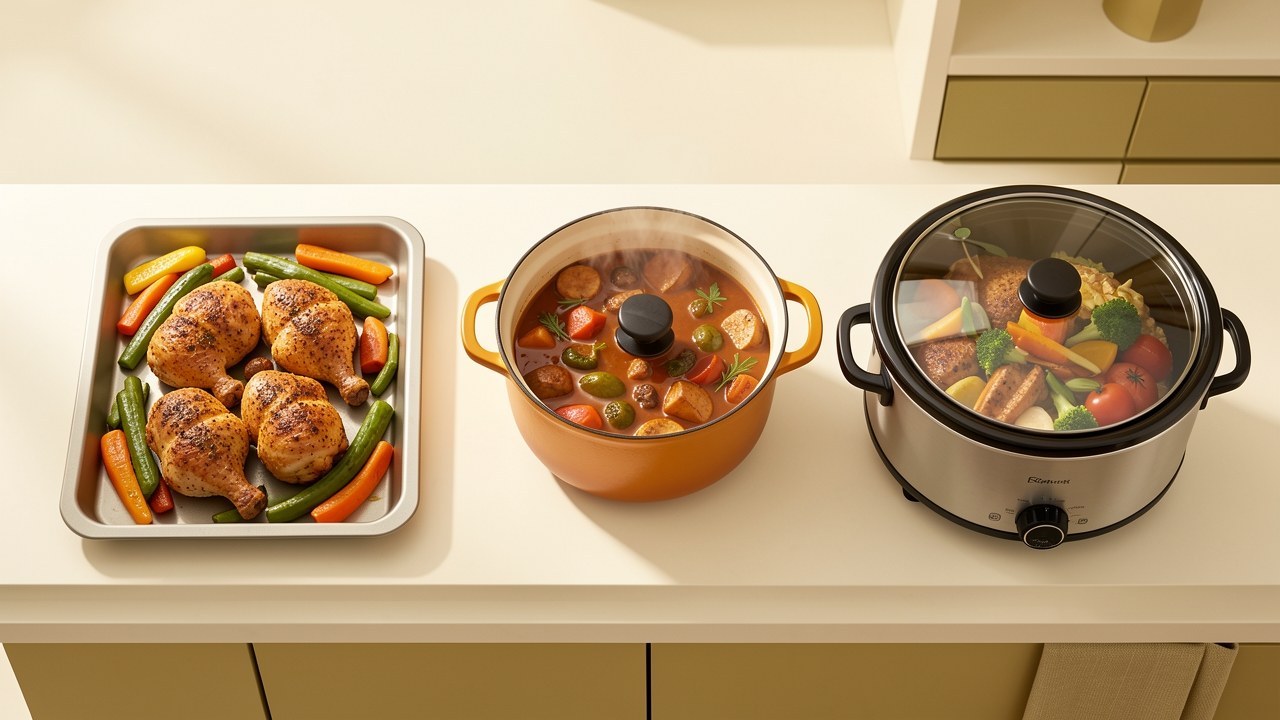
Why Cooking Method Matters for Busy Nights
When you're short on time, the way you cook can make or break your dinner plans. Certain methods save active time, others cut cleanup, and some just let you walk away. Choosing the right approach for your evening can help you get a balanced meal on the table without the stress.
Research suggests that cooking more at home is linked to healthier eating patterns, but that only helps if you actually have the time and energy. Busy households benefit from having go-to methods that fit their schedule.
- Cooking at home is associated with healthier diets and lower risk of type 2 diabetes.
- Using convenience items like frozen vegetables and pre-cooked proteins can cut down prep time significantly.
- Stocking your kitchen with staples like whole grains and basic condiments makes impromptu healthy meals easier.
Sources: Harvard Health Publishing
Sheet-Pan Dinners: Low Effort, Easy Cleanup
Sheet-pan dinners involve roasting proteins and vegetables together on a single baking sheet. They are prized for minimal hands-on time and easy cleanup. Using pre-cut vegetables or frozen options can further speed up the process.
Choose a protein like chicken breast, fish, or tofu, add a variety of vegetables, and season with herbs and spices. Serve with a whole grain like quinoa or brown rice for a complete meal.
- Choose a protein like chicken breast, fish, or tofu.
- Add a variety of vegetables—fresh or frozen—for color and nutrients.
- Season with herbs, spices, and a healthy oil, then roast until done.
- Serve with a whole grain like quinoa or brown rice for a complete meal.
Sources: Harvard Health Publishing
One-Pot Dinners: Cook Everything in One Vessel
One-pot dinners are all about simplicity: you cook your protein, grains, and vegetables in a single pot or Dutch oven. Soups and stews are classic examples, and they can be both nutritious and filling, especially when broth-based and packed with vegetables.
A healthy one-pot meal might be a hearty vegetable soup or a chicken and rice skillet. You can control the ingredients and keep it balanced with lean proteins and whole grains.
- Start with a base of onions, garlic, and spices.
- Add broth, canned tomatoes, or water along with grains and vegetables.
- Include a lean protein such as beans, lentils, or chicken.
- Let everything simmer until cooked through.
Sources: Harvard Health Publishing
Slow Cooker Dinners: Set and Let It Cook
Slow cookers are perfect for mornings when you know you'll have no time later. You add ingredients in the morning, set the cooker, and come home to a ready meal. This method can help you incorporate more vegetables and lean proteins with minimal effort.
Using a slow cooker is a great option for busy weekdays when you want a home-cooked meal without evening prep.
- Layer ingredients in the slow cooker, with denser vegetables at the bottom.
- Add liquid like broth or sauce to keep things moist.
- Cook on low for 6-8 hours or high for 3-4 hours, depending on the recipe.
- Add quick-cooking items like peas or fresh herbs near the end.
Sources: Harvard Health Publishing
Skillet and Stir-Fry Dinners: Quickest on the Stove
If you need dinner on the table in a flash, a skillet or stir-fry is a top choice. These methods cook food quickly over high heat, often in under 30 minutes. You can use pre-cooked rice, frozen vegetables, and pre-cooked proteins to speed things up even more.
A stir-fry is a great way to get a healthy dose of vegetables, and it's quick to prepare, especially with pre-cooked brown rice. The key is to have ingredients ready before you start cooking, as the process moves fast.
- Heat a little oil in a skillet or wok over high heat.
- Add your protein and cook until nearly done.
- Add vegetables and stir-fry for a few minutes until crisp-tender.
- Finish with a sauce made from soy sauce, ginger, garlic, and a touch of honey.
- Serve over rice or noodles.
Sources: Harvard Health Publishing
How to Pick a Method Based on Your Evening
Choosing the right method depends on how much time you have, how much energy you have, and how much cleanup you're willing to do.
When you're short on time and want something fast, a stir-fry or skillet dinner is your best bet. If you want to minimize clean up, sheet-pan or one-pot meals are great options. If you're away from home all day, a slow cooker can be a lifesaver.
Consider your energy level and what else you need to accomplish that evening. Some nights you might feel like doing a little prep, while others you just want to set it and forget it.
- Pressed for time? Choose a stir-fry or skillet dinner.
- Tired and want minimal cleanup? Go with a sheet-pan or one-pot meal.
- Away from home in the afternoon? Use a slow cooker for a ready dinner.
- Need to use up vegetables? Any method works; try a stir-fry for quick cooking.
Sources: Harvard Health Publishing
Evidence-Backed Named-Item Comparison
To help you decide, here's a comparison of some popular cooking methods based on available evidence. Note that specific times and cleanup levels are not consistently reported, but we share the general characteristics supported by research.
| Option | Category | Typical total time | Cleanup level |
|---|---|---|---|
| Sheet-pan dinners | Cooking method | Not explicitly stated in available sources | Not explicitly stated |
| Stir-fry | Cooking method | Not explicitly stated but described as quick | Not explicitly stated |
| Soup | Cooking method | Not explicitly stated | Not explicitly stated |
Sources: Harvard Health Publishing
Frequently asked questions
Which cooking method is fastest for a healthy dinner?
Stir-fry is described as quick in the research, especially when you use pre-cooked ingredients like microwave brown rice. The sources we reviewed do not provide specific total times for sheet-pan or slow cooker methods.
Sources: Harvard Health PublishingCan I use a slow cooker for quick weeknight dinners?
Slow cookers are not quick in terms of total time, but they are convenient because you prepare ingredients in the morning and let them cook all day. This means you come home to a ready meal, saving your evening time. It's a different kind of time-saving.
Sources: Harvard Health PublishingWhat's the cleanest method for cooking a healthy dinner?
The research we reviewed does not explicitly compare cleanup levels across methods. Sheet-pan and one-pot dinners each use a single cooking vessel, which may mean fewer dishes, but this wasn't directly measured in the evidence we found.
Sources: Harvard Health PublishingAre sheet-pan dinners healthy?
Sheet-pan dinners can be healthy if you choose lean proteins and a variety of vegetables, and use minimal added fats and sodium. This method allows you to control ingredients and is a convenient way to include more vegetables in your diet.
Sources: Harvard Health PublishingSources
- Real-life healthy dinners (for real people with real busy lives) - Harvard Health — Harvard Health Publishing
- Healthy meals: 3 easy steps to success - Harvard Health — Harvard Health Publishing
- Soup up your meals - Harvard Health — Harvard Health Publishing