Why Slow Cooker Dinners Suit Busy Schedules
Slow cookers let you prepare a wholesome dinner with a short block of morning prep. You add ingredients, set the timer, and return to a cooked meal, which makes them a reliable choice for weekdays when you have limited time in the evening.
The appliance also helps you make the most of economical ingredients. Tougher cuts of beef, such as brisket or chuck, become tender during the long, gentle cooking process, and you can stretch meals with beans, lentils, and root vegetables.
- Minimal hands-on time: most recipes need only 10 to 20 minutes of prep before cooking begins.
- Set-and-forget convenience: the slow cooker handles the cooking while you focus on other tasks.
- Budget-friendly: affordable cuts and pantry staples work well in slow cooker recipes.
Sources: Spice Storyteller, Our Nourishing Table, Facebook
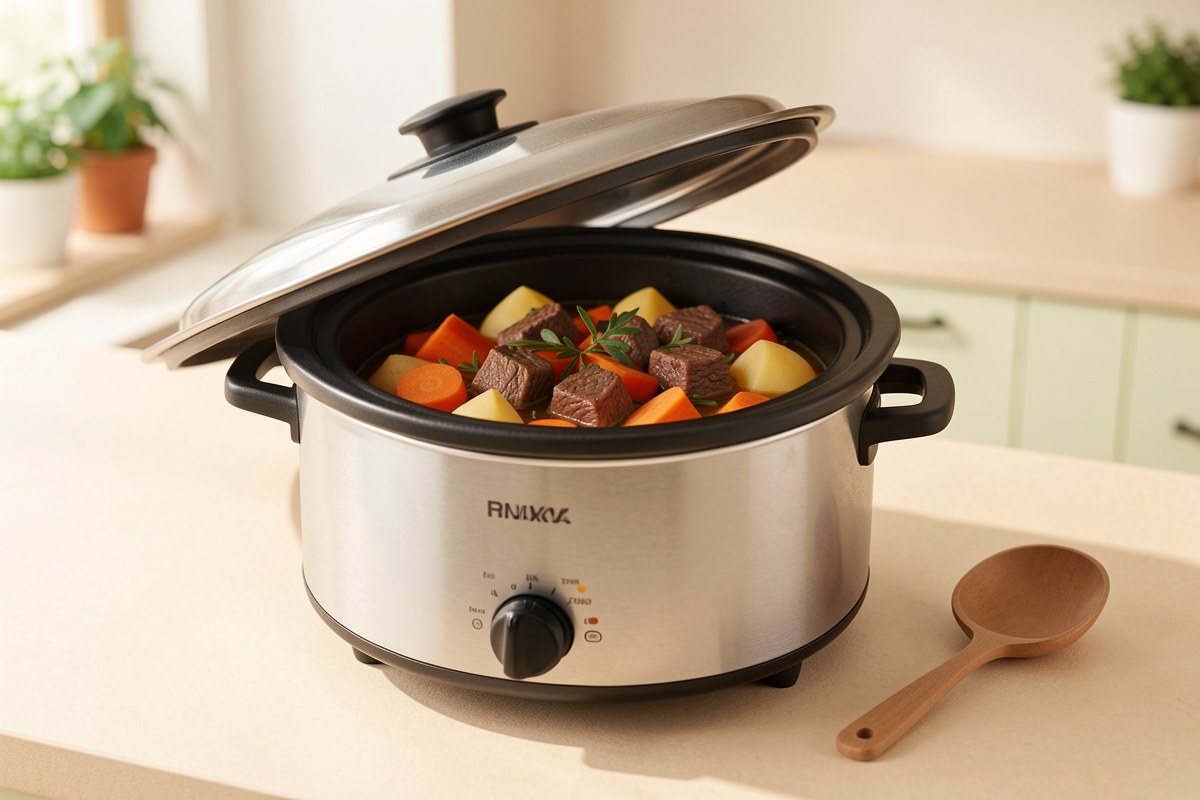
Choosing Healthy Ingredients for the Slow Cooker
Balanced slow cooker meals combine lean protein, plenty of vegetables, and fiber-rich staples. Chicken thighs are a forgiving choice because they stay juicy and tender even with longer cook times, while chicken breast can dry out unless it is part of a high-liquid dish such as soup.
For plant-based meals, lentils and beans provide protein and fiber, and they hold up well over hours of gentle cooking. Root vegetables like sweet potatoes, potatoes, carrots, and parsnips keep their shape and absorb surrounding flavors.
To protect the nutrients and color of leafy greens, add spinach, kale, or Swiss chard during the last 20 to 30 minutes of cooking rather than at the start.
- Choose leaner cuts of meat or trim visible fat before cooking.
- Include a rainbow of vegetables to boost vitamins and minerals.
- Use herbs, spices, citrus, and vinegars to add flavor without excess salt or sugar.
Sources: Our Nourishing Table
Lean Protein and Vegetable Slow Cooker Recipes
These recipe ideas show how simple ingredients become a balanced dinner with minimal effort. They are examples to inspire your own meal planning; exact cooking times may vary with your appliance and the size of your ingredients.
Lemon herb chicken with vegetables: place chicken pieces and sturdy vegetables such as carrots, potatoes, and green beans in the slow cooker. Season with lemon, garlic, and dried herbs. Cook on low for 6 to 7 hours or on high for 3 to 4 hours. This dish offers a good balance of protein and produce.
Pulled pork tacos: use pork shoulder, which becomes fork-tender after a long cook. Season with a spice rub and a little liquid, then cook on low for 8 to 10 hours or on high for 4 to 5 hours. Serve with avocado salsa and corn tortillas.
For a warming soup-style meal, lentil soup with spinach is both filling and light. Combine lentils, diced tomatoes, broth, and aromatics, and cook on low for 6 to 8 hours or on high for 3 to 4 hours. Stir in spinach during the last 30 minutes.
- Always cut vegetables into uniform pieces for even cooking.
- If using chicken breast, consider a soup or stew with extra liquid to keep it moist.
- Add delicate vegetables like peas or zucchini in the final 30 to 60 minutes to prevent them from turning mushy.
Sources: Spice Storyteller, Our Nourishing Table
Hearty Vegetarian Slow Cooker Ideas
Vegetarian slow cooker meals are easy to build around protein-rich legumes and fiber-packed vegetables. A classic option is a quinoa and black bean chili: combine rinsed quinoa, black beans, diced tomatoes, onions, peppers, and chili spices, then cook on low for 6 to 8 hours or on high for 3 to 4 hours. This recipe is filling and provides plant-based protein and fiber.
Other satisfying ideas include vegetarian chili and a cauliflower lentil curry. These dishes rely on pantry staples and can be customized with whatever vegetables you have on hand. Because beans and lentils are naturally high in fiber and protein, they make the meal both filling and nutritious.
- Use vegetable broth instead of water for more depth of flavor.
- Rinse canned beans to reduce sodium.
- Add a squeeze of lime or a spoonful of yogurt before serving to brighten flavors.
Sources: Spice Storyteller, Our Nourishing Table
Preventing Overcooked Vegetables and Bland Flavors
The slow cooker’s moist, even heat can turn delicate vegetables soft if they cook for the entire time. A useful strategy is to add quick-cooking vegetables later in the cooking process. Leafy greens, for instance, should be stirred in during the final 20 to 30 minutes, while softer vegetables like zucchini or bell peppers can go in about an hour before the end.
Flavor also benefits from a little extra attention. Many slow cooker models include a sear or sauté function, which lets you brown meat or sauté onions and garlic before slow cooking. This step adds caramelized depth without needing a separate skillet. If your model lacks that function, you can still brown ingredients on the stovetop first.
Season thoughtfully, but remember that flavors concentrate as the liquid reduces. You can always adjust salt and pepper at the end, and a splash of vinegar or lemon juice can brighten a dish that tastes flat.
- Layer ingredients wisely: place root vegetables and meat at the bottom, and add tender items later.
- Use a meat thermometer to check doneness without lifting the lid too often.
- Let the cooker finish its cycle; lifting the lid releases heat and extends cooking time.
Sources: Our Nourishing Table
Safe Slow Cooker Use and Internal Temperatures
Using a slow cooker safely starts with proper thawing. For the most current guidance, consult the USDA Food Safety and Inspection Service for recommendations on thawing meat and poultry.
When you cook meat, always verify that it has reached a safe internal temperature. Different types of meat have different recommended temperatures, so it is important to use a food thermometer and check reliable sources like the USDA for the latest numbers.
The slow cooker should be filled appropriately for best results. Too little food may cook too quickly, while too much can cause uneven cooking or overflow. Keep the lid on during cooking—except for necessary stirring—to maintain a consistent temperature.
These safety basics help you enjoy the convenience of slow cooking without compromising on food safety. For detailed guidance, consult official resources like the USDA.
- Thaw meat and poultry according to official USDA guidance.
- Use a food thermometer to confirm safe internal temperatures.
- Fill the slow cooker according to the manufacturer's recommendations.
- Store leftovers in shallow containers and refrigerate within two hours.
Sources: Our Nourishing Table
Frequently asked questions
How do I thicken slow cooker sauces?
If your sauce is too thin, you can mix a tablespoon of cornstarch with a couple of tablespoons of cold water and stir it into the hot liquid at the end of cooking. Let it simmer for a few minutes to thicken. Alternatively, you can remove the lid for the last 30 to 60 minutes to let excess liquid evaporate, or mash some beans or cooked vegetables into the sauce.
Sources: Our Nourishing TableCan I cook rice or pasta in a slow cooker?
Yes, but rice and pasta need special handling. For pasta, add it during the last 30–40 minutes of cooking to keep it from turning mushy. For rice, it is often easier to cook it separately and serve it with the slow cooker dish, because rice can become sticky or overcook in the slow cooker. Some recipes are designed for rice and are meant to be cooked together, but you need to follow those recipes closely.
Sources: Our Nourishing TableSources
- 5 Slow Cooker Recipes for a Healthy Dinner - Spice Storyteller — Spice Storyteller
- 30 Healthy Slow Cooker Recipes - Our Nourishing Table — Our Nourishing Table
- These 30+ Healthy Slow Cooker Recipes are the best way to get ... — Facebook