Why Chicken Is a Versatile Protein for Quick Dinners
Chicken is a go-to for busy cooks because it adapts to so many cooking methods and flavor profiles. You can roast it, grill it, simmer it in a skillet, or let an air fryer do the work, and it pairs well with vegetables, grains, and sauces from around the world.
Boneless, skinless chicken breasts are a popular choice for quick meals because they cook fast and are naturally lean and high in protein. Chicken thighs are another option that brings a little more richness and stays moist even if you push the cook time slightly.
Because chicken takes on the seasonings around it, you can change the whole mood of dinner by switching a marinade, a spice rub, or a finishing sauce. That flexibility makes it easy to keep weeknight meals interesting without spending extra time in the kitchen.
- Cooks quickly: thin cuts and small pieces are ready in minutes.
- Adaptable: works in stir-fries, tacos, salads, pasta, and more.
- Lean protein: chicken breast is a low-fat source of high-quality protein.
- Family-friendly: a familiar base that most kids and adults enjoy.
Sources: Jar of Lemons, Allrecipes, Skinnytaste, The New York Times, Zestful Kitchen, Wholesome Yum, Joyful Healthy Eats, The Real Food Dietitians
Cooking Methods That Save Time and Keep Chicken Juicy
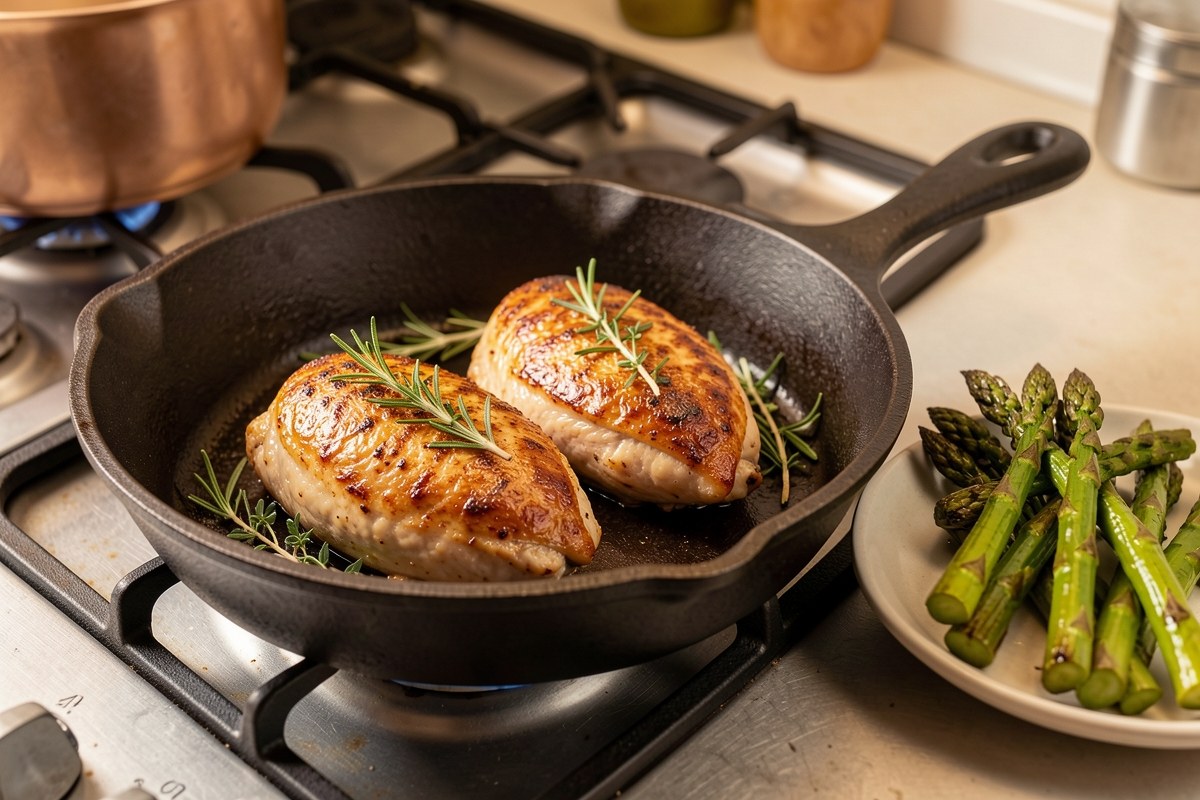
The method you choose affects both cooking time and the final texture. For fast weeknight cooking, pan-searing, stir-frying, and air frying are all efficient options. Each method builds flavor while keeping the chicken tender, especially when you avoid overcooking.
No matter which method you use, a meat thermometer is the most reliable way to ensure chicken is safely cooked. Aim for an internal temperature of 165°F in the thickest part of the meat, as this is the temperature that makes it safe to eat.
To keep chicken breast from drying out, try brining it briefly in salt water before cooking, and avoid leaving it on the heat longer than needed. Letting the chicken rest for a few minutes after cooking also helps the juices redistribute.
- Pan-searing: gives a golden crust that adds flavor while sealing in juices.
- Air frying: cooks quickly with less oil and gives a crisp exterior.
- Stir-frying: great for bite-sized pieces with vegetables.
- Meat thermometer: remove from heat at 165°F internal temperature for safety.
Sources: Jar of Lemons, The Domestic Geek (YouTube), Wholesome Yum, Paula Deen (YouTube)
Quick and Easy Chicken Dinner Ideas
When time is tight, having a few go-to ideas helps you pull together a healthy meal without a lot of thought. These chicken dinner ideas are designed to be on the table in 30 minutes or less, making them perfect for busy weeknights.
For example, a ginger chicken stir-fry with fresh vegetables is a one-skillet meal that’s both quick and colorful. Chicken tacos with a slaw or simple toppings are another fast option that lets everyone customize their own plate.
If you prefer something lighter, a chicken cobb salad or a Greek chicken pasta are balanced choices that combine protein, vegetables, and whole grains. The key is to have a few versatile recipes that you can rotate depending on what’s in your fridge.
- Stir-fries: chicken strips with crisp vegetables in a savory sauce.
- Tacos: seasoned chicken in warm tortillas with your favorite toppings.
- Salads: grilled chicken over greens with plenty of vegetables.
- Pasta dishes: chicken with whole-grain pasta and a light sauce.
Sources: Jar of Lemons, Allrecipes, The New York Times, Zestful Kitchen, The Real Food Dietitians
Sheet-Pan and One-Pan Chicken Dinners for Minimal Cleanup
Sheet-pan dinners are a lifesaver when you want to avoid a pile of dishes. Simply place chicken and vegetables on a single baking sheet, season them, and roast until everything is tender and golden. The result is a complete meal that’s easy to clean up after.
One-pan skillet meals work in a similar way on the stovetop. You can sear the chicken, then build a sauce or add vegetables right in the same pan, so flavors meld and you only have one pan to wash.
These approaches are especially helpful on nights when you’re short on energy but still want a homemade dinner. With a little prep, you can have a nutritious meal with minimal time at the stove.
- Sheet-pan: roast chicken and vegetables together on one tray.
- One-pan: cook everything in a single skillet, from chicken to sauce.
- Less cleanup: fewer dishes means more time to relax.
- Easy to scale: make enough for leftovers or a crowd.
Sources: Jar of Lemons, Skinnytaste, Zestful Kitchen
Make-Ahead Chicken Dinners for Busy Weeks
Planning ahead can turn a hectic week into a series of easy meals. Make-ahead chicken dinners, such as burrito bowls, shredded chicken, and casseroles, let you cook once and enjoy throughout the week.
For instance, slow-cooker shredded chicken is versatile: you can use it in tacos, salads, or sandwiches. Burrito bowls can be assembled in advance, with cooked chicken, rice, beans, and toppings stored separately for quick lunches or dinners.
By investing a little time on the weekend, you can ensure that healthy chicken dinners are within reach even on the busiest days.
- Burrito bowls: assemble with chicken, rice, beans, and toppings.
- Shredded chicken: use in tacos, soups, or salads.
- Casseroles: can be prepped and baked later.
- Portion control: easy to divide into individual containers.
Sources: Jar of Lemons, Skinnytaste, Zestful Kitchen, Joyful Healthy Eats, The Real Food Dietitians
How to Adapt Recipes for Different Cuts
Most chicken recipes can be made with either breasts or thighs, though you may need to adjust cooking times. Boneless, skinless thighs have a slightly higher fat content, which helps keep them moist and forgiving if you accidentally cook them a few minutes too long.
Boneless, skinless breasts are leaner and can dry out more quickly, so it’s best to watch the internal temperature carefully. If a recipe calls for bone-in pieces, adjust the cooking time accordingly, since bone-in chicken takes longer to cook.
In many dishes, such as stir-fries or salads, thighs and breasts can be used interchangeably. The flavor may change slightly, but the dish will still be delicious.
- Thighs: more forgiving, stay moist, and gain flavor from cooking.
- Breasts: leaner, cook faster, but need careful timing to avoid dryness.
- Mixed cuts: you can use whatever you have on hand.
- Adjust time and temperature based on the cut.
Flavor Variations to Keep Meals Interesting
One of the best things about chicken is how well it takes on different flavors. You can rotate through a few staple marinades and spice blends to keep your dinners from feeling repetitive.
Try lemon and herb for a fresh, bright flavor; honey and garlic for a touch of sweetness; or a barbecue or teriyaki sauce for a family-friendly favorite. Mediterranean spices, with oregano and lemon, are another easy option.
By keeping a few pantry staples on hand, you can change the personality of a simple chicken dinner without extra effort.
- Lemon herb: olive oil, lemon, and fresh or dried herbs.
- Honey garlic: sweet and savory, quick to whisk together.
- Barbecue or teriyaki: bold flavors that appeal to many households.
- Mediterranean: oregano, garlic, and lemon for a bright twist.
Sources: Allrecipes, The New York Times, Zestful Kitchen, The Real Food Dietitians
Frequently asked questions
How do I keep chicken breast from drying out?
Brining the chicken in a salt-water mixture before cooking can help it stay juicy. Also, avoid overcooking: use a meat thermometer and remove the chicken from the heat when it reaches an internal temperature of 165°F. Letting it rest for a few minutes allows the juices to redistribute.
Sources: Jar of Lemons, The Domestic Geek (YouTube), Wholesome YumWhat is the healthiest way to cook chicken?
Methods that require little added fat, such as baking, grilling, air frying, or poaching, are good options. The key is to avoid deep-frying or adding heavy sauces. Pairing chicken with plenty of vegetables is also a healthy choice.
Sources: Skinnytaste, The Real Food DietitiansCan I use chicken thighs instead of breasts in recipes?
Yes, you can substitute thighs for breasts in most recipes. Thighs have a bit more fat, which helps keep them moist, but they may require a few extra minutes of cooking. Just be sure to check that they reach an internal temperature of 165°F.
Sources: The Domestic Geek (YouTube), Joyful Healthy EatsHow long is cooked chicken safe to store in the fridge?
Cooked chicken is generally safe to store in the refrigerator for up to four days. It should be kept in an airtight container. Always reheat leftovers to an internal temperature of 165°F before eating.
Sources: Jar of Lemons, Skinnytaste, The Real Food DietitiansSources
- Quick and Easy Chicken Dinner Recipes — Jar of Lemons
- Healthy Chicken Dinners Ready in 30 Minutes or Less — Allrecipes
- Healthy Chicken Breast Recipes | Easy Chicken Dinners — Skinnytaste
- Easy, Healthy Chicken Dinner Ideas - NYT Cooking — The New York Times
- 49 Best Healthy Chicken Recipes for Easy Weeknight Meals — Zestful Kitchen
- 3 HEALTHY Chicken Dinners | Dinner Made Easy — The Domestic Geek (YouTube)
- 50+ Easy, Healthy Chicken Recipes - Wholesome Yum — Wholesome Yum
- Healthy Chicken Recipes | Joyful Healthy Eats — Joyful Healthy Eats
- 50 Healthy Chicken Recipes - The Real Food Dietitians — The Real Food Dietitians
- Love & Best Dishes: Skillet Chicken, Peas, and Greens Recipe | Healthy Chicken Breast Dinner Ideas — Paula Deen (YouTube)